

Overperforming and underachieving
Performance creativity is burning us out

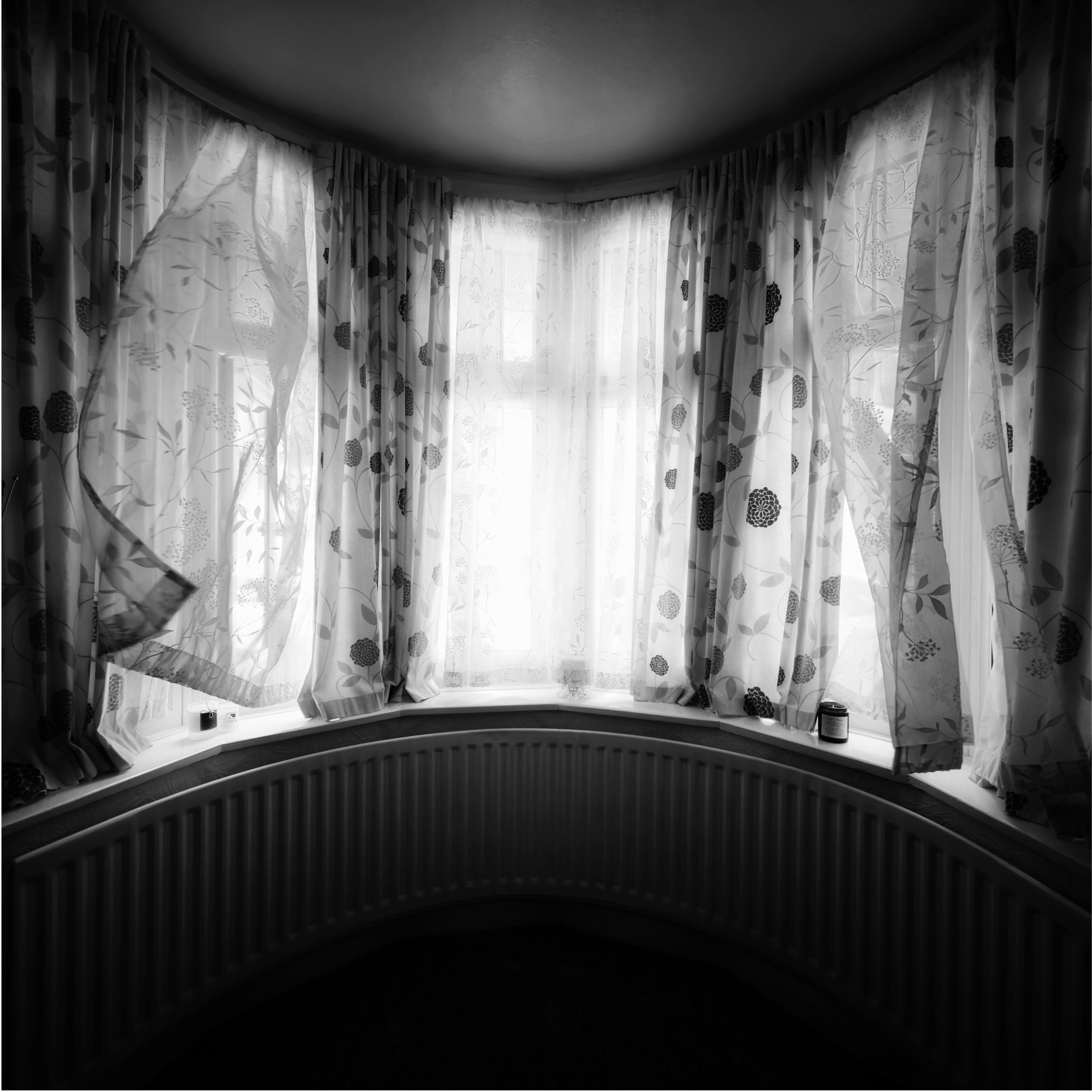
Summer breeze, sitting in my parents home I was fascinated by the casual movement of the curtains in the gentle breeze on a very hot Saturday afternoon. There’s no striving on a hot day, everything feels still, waiting, almost holding its breath, until that soft breeze makes the curtains dance revealing a moment of movement within the heavy stillness.
Hi,
Stop Performing. Start Seeing.
I spent years photographing for people I never met.
As a news photographer I made images for picture editors, art directors and for the public, always photographing in the hope that my pictures would land, be accepted, approved of and liked, long before social media likes became a driving force.
Even as a Picture Editor I was a human filter. Twenty thousand images a day passing under my eyes, and every single one of them made with the same silent question behind it: will this land? Will this get picked? Will an audience I will never see, never speak to, never know a single thing about, decide that this image is worth its attention?
That question doesn’t stay at work. It comes home with you. It gets into how you see. Eventually it gets into how you live.
That’s the thing nobody warns you about with performing for an audience, any audience, whether it’s a newsroom, a grid, or a set of followers you’ll never sit down with for a cup of tea. You start editing yourself before you’ve even had the thought. You start reaching for the shot that will land rather than receiving the one that’s true.
That’s not creativity. That’s performance. And performance burns you out in a way that making things never does.
I see it constantly in photography now, from the other side of the camera. People arriving at a location not to look at it, but to produce the version of it that will do well. Editing the life out of an image until it’s polished enough to post and honest enough to feel like nothing at all.
It’s exhausting to watch. I know first hand how exhausting it is to live like that.
Here’s what I’ve come to believe, slowly, the hard way: the most useful thing you can do with a camera is stop manufacturing an image and start receiving one.
Light doesn’t perform for anyone. It just arrives. It falls on the puddle whether or not you’re there to see it, moves across the field in its own time, indifferent to whether you had your camera ready.
Notice the words we reach for without thinking. We talk about taking a photograph, shooting a scene, capturing a moment, and the language gives the whole culture away. Taking implies something has to be grasped before it slips away. Shooting borrows its aim from a gun. Capturing assumes the world was trying to escape you. None of that is true. Nothing out there is running. Nothing needs to be seized.
It only needs to be received.
Receiving is quieter than any of that. It’s standing still long enough for the light to find you, for a face to be exactly as tired or as open as it actually is in that second, for a puddle to hold whatever pattern it happens to be holding without you correcting it. Accepting what is, and simply holding your camera up to meet it, is a spiritual act before it’s a creative one.
Breath slowing to match the pace of the light changing. The body remembering it’s allowed to just watch. The moment you stop asking “will this do well?” and start asking “does this feel like I felt?”, you come back into yourself and the world at the same time, because they were never really separate. You’re in quiet conversation with the light instead, with whatever is real enough to be standing in front of you.
That’s the difference between photography that empties you out and photography that fills you back up.


This is why stillness matters more than speed. A curtain doesn’t move for you on command. It moves when the room decides to breathe, when a window is cracked open on a hot day and the air finds its own way in, catching the fabric and letting it go again in its own time. You cannot rush that. You can only wait for it, patient enough to be there for the moment it happens. That patience, that willingness to simply stay without hurrying the world along, is the whole of photography for me now.
It’s the whole of what I’m exploring this summer too, in The Summer of Stillness, the online workshop I’m currently running. Not a course in technique, but in patience. In learning to wait for a room, a breeze, a moment, rather than forcing one into being.
I think a lot of us are quietly exhausted by the same thing, whatever our version of the “grid” is. Told to show up, to perform relatability, to manufacture warmth or wisdom or wonder on schedule, for onlookers who are, in the end, mostly imagined. You cannot sustain a life built around people you don’t actually know. You end up designing yourself for watchers who were never really watching that closely in the first place.
So here’s the invitation, to you and honestly to myself as much as anyone. Put the camera up not to prove something, but to receive something. Let the light find you before you go chasing it. Let the image be unfinished, unpolished, unperformed, true to what actually passed in front of you rather than what you think will get picked.
You’ll be amazed how much lighter that is to carry.
Because in the end, the picture is never for the strangers you’ll never meet. It is always for you.
Thank you for your time today
Best wishes
Paul
Trebah Garden One Day Workshops
Be guided through a day of mindful photography & the meditative process of Japanese Stab Binding, taking the handcrafted keepsake away.
An Invitation to Pause: Autumn, Stillness and the Art of Making.
September 30th 2026 0930 - 1700
Take a breath. Feel your body grounded, and let your gaze wander.
Join me for a unique, one-day immersive retreat within the sub-tropical soul of Trebah. This experience is a bridge between the wild, architectural beauty of the gardens and the quiet, grounding joy of creating a handmade book from the photographs you will make
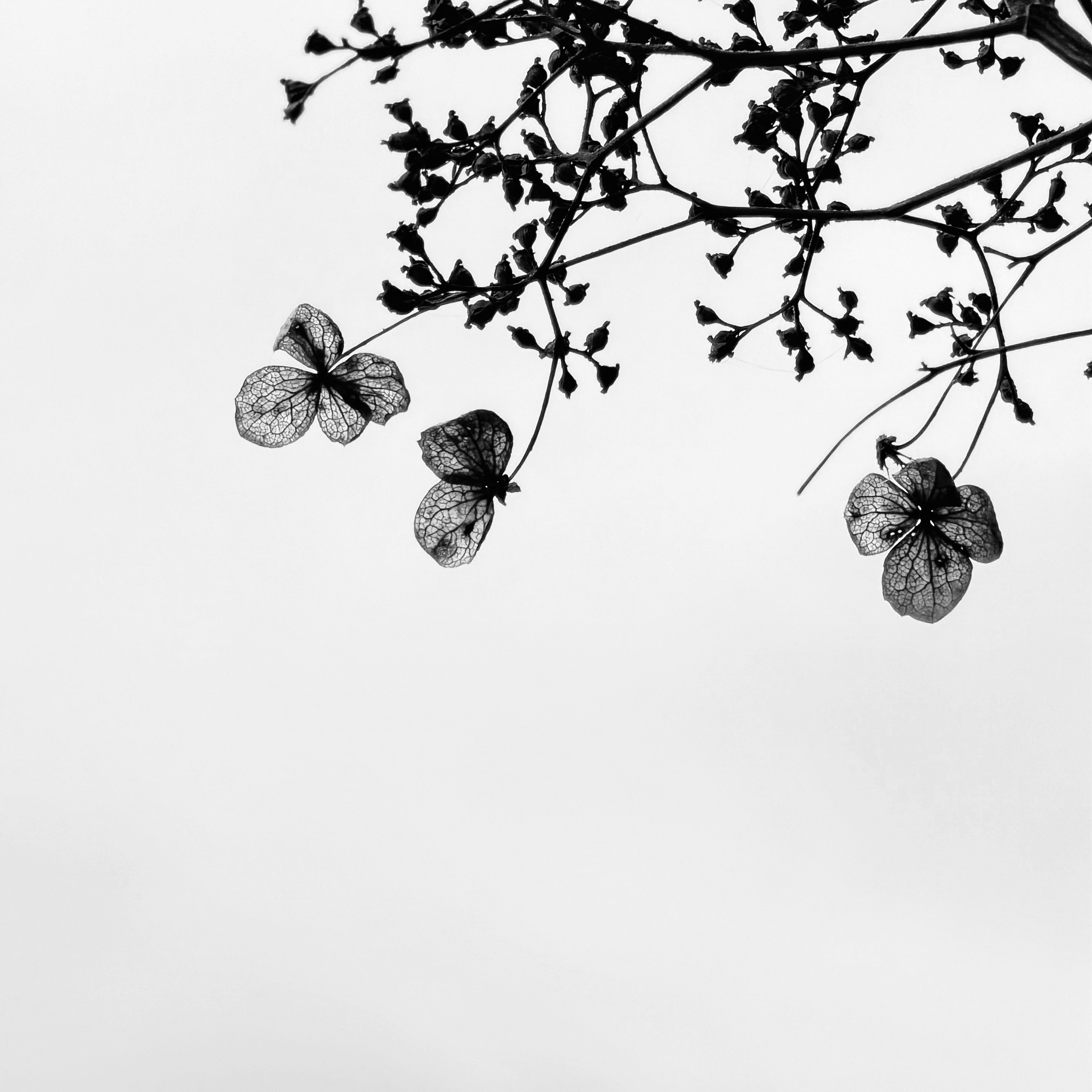
There is a quiet magic that occurs in September. It is a time when the frantic energy of summer starts to fade, and the earth begins its gentle, necessary exhale. Here in Cornwall, as the air grows cooler, Trebah Garden undergoes a breathtaking transformation. Widely cherished as a sub-tropical paradise with a stunning coastal backdrop, this twenty-six acre valley garden offers a deeply immersive experience as the seasons shift. The dramatic canopies of exotic blooms give way to a rich tapestry of amber, rust, and gold. In Hydrangea Valley, late blooms cast clouds of china blue and soft white across Mallard Pond, while the spectacular champion trees begin to dominate the landscape.
We live in a world where we have become slaves to screens and timelines, constantly chasing the next thing. Mindful photography invites us to break free. It whispers, "Stop. Look. Feel." It is a space free of judgment, open to photographers of all abilities, whether you carry a camera bag full of specialized gear or simply an iPhone in your pocket. This day is not about technical perfection or rules; it is about your personal connection to the world around you.
Nature does not rush its transition; it transitions softly, inviting us to do the same.
Still: A Mindful Practice for Photographers
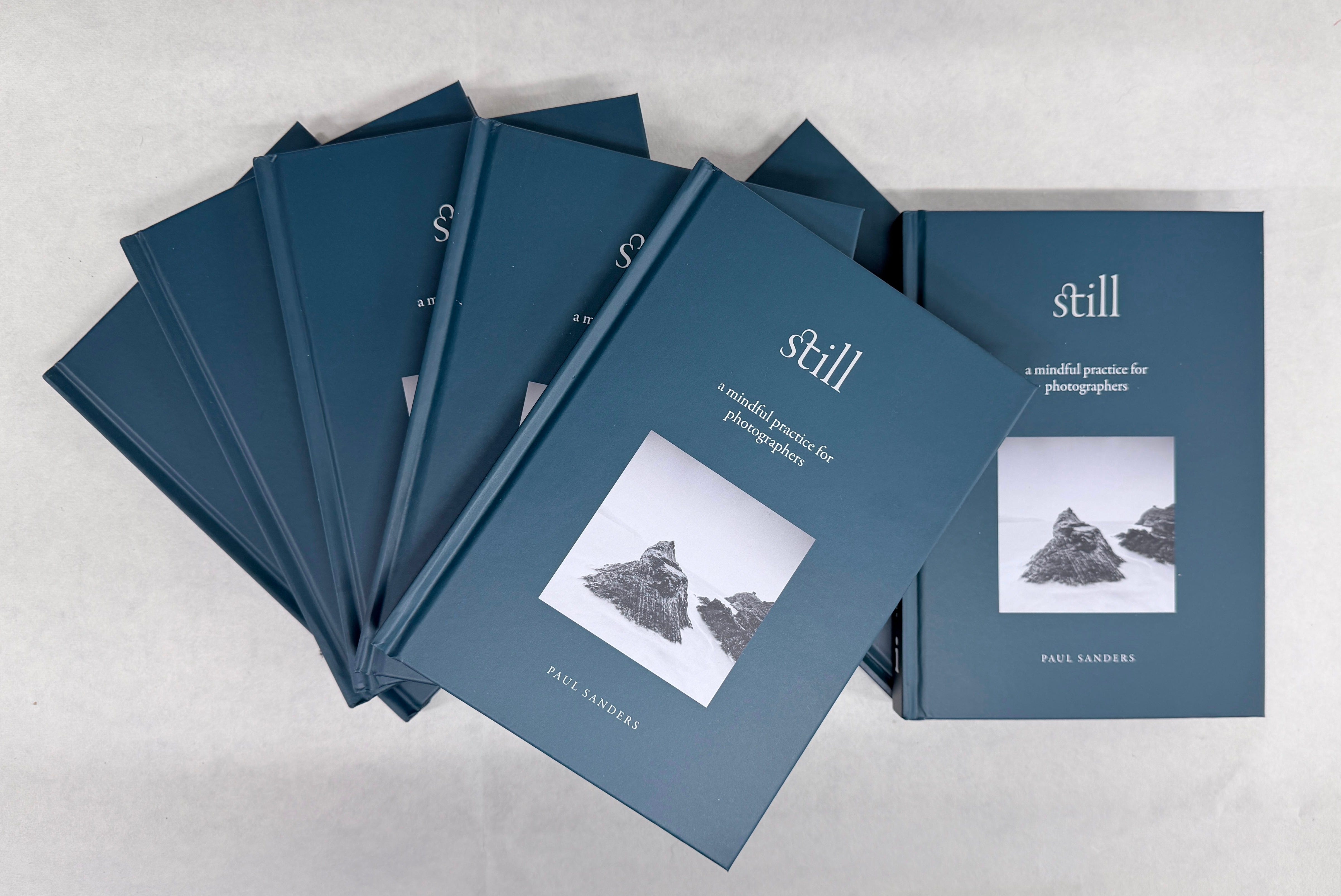
My first book “Still - a mindful practice for photographers” has been on sale for a couple of months now and is listed as a bestseller on Amazon and Waterstones in the UK - which I still can’t believe. The feedback has been incredible, I am so grateful to everyone who has ordered a copy. If you don’t have a copy yet it is on sale in most good bookshops and via numerous online book retailers too.
There is a German version too and in the US it is available from all good bookstores and The Getty Museum
“More than a photography book, Still is a must-have guide for anyone seeking calm and clarity in their creative life.”
As you say receive an image dont force one into the camera.
The curtain is a fabulous visual metaphor.